🌎Culture & Language Exchange Program: Fostering Lifelong Learners through ATL(Approaches to Learning)Skills

Updated: Jan 30

Our G6–G8 students at the VAS Sala Campus have launched an exciting Culture & Language Exchange Program in collaboration with Nanxing Junior High School in Chiayi City, Taiwan. This project provides a powerful Global Context for students to apply their Chinese language skills while acting as cultural ambassadors for Vietnam.
Although we are a Cambridge school, I have intentionally mapped the curriculum to the IB MYP Communication and Social ATL clusters. This ensures that the collaboration between Taiwanese and Vietnamese students meets specific requirements for Collaborative Learning. This initiative does more than build language proficiency; it enables students to transfer skills across disciplines, effectively preparing them for the rigors of the DP programme.
⭐ Why ATL Skills Are Important: Preparing for Real Life
By actively engaging in this project, students are learning to think independently, work well with others, and manage themselves effectively. These skills help them research effectively, transfer skills across subjects, and ultimately prepare for real-life challenges and the demanding IBDP programme. ATL skills are taught directly and indirectly in class, with teachers planning specific activities where students practice these skills while learning content.
🤝 Project Structure: Collaborative Learning and Practicing Social Skills
This collaborative project is meticulously designed to enhance both linguistic skills and foster genuine cross-cultural communication, focusing heavily on developing vital Social Skills:
Working in Groups: Each Taiwanese student is paired with a Vietnamese student to form a collaborative team. Students must practice active listening, effective communication, and establishing cross-cultural rapport.
Process: Teams select and explore one shared project topic.
Deliverables: They create a formal presentation and a recording of their final work.
Cultural Exchange & Conflict Resolution: Following their presentations, students engage in a unique Q&A segment called "My Curiosity." They share their questions and responses in both English and Chinese to ensure bilingual practice and deep understanding. Through this process, they practice showing empathy and navigating potential misunderstandings, thus developing skills in resolving conflicts.
🧠 Focused on ATL: Learning How to Learn
A central component of this exchange is the development of Approaches to Learning (ATL) skills, a core framework within the International Baccalaureate (IB) programmes (MYP and IBDP).
ATL Core Purpose:
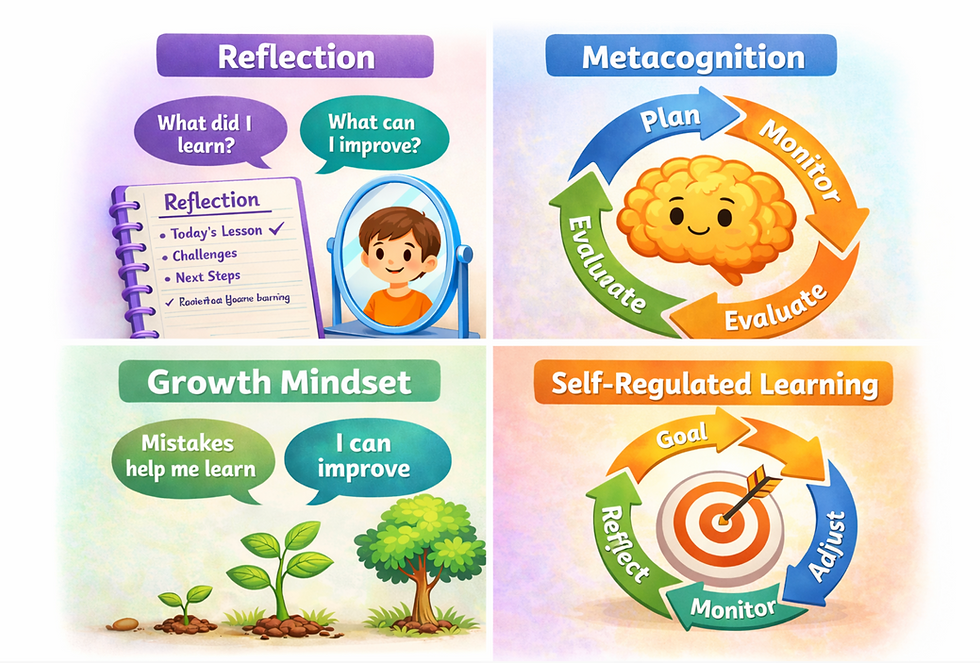
The goal of ATL is to teach students how to learn. It shifts the focus from simply acquiring knowledge (what they learn) to developing the essential skills, strategies, and attitudes needed to become self-regulated, resilient, and lifelong learners.
🛠️ ATL Skills in Action: Applying and Transferring Core Skills
Our students are actively applying and refining the five key ATL skill categories through their collaboration with their Taiwanese partners:
Communication Skills
Expressing ideas clearly: Practiced when sharing presentations and asking/answering "My Curiosity" questions in both languages.
Presenting information: Students utilize different media to communicate (slides, recordings, spoken language) to deliver their final products.
Research Skills
Finding, evaluating, and using information: Utilized as they explore a topic (such as meals or local places) and gather necessary vocabulary, imagery, and data.
Note-taking and Referencing: Students practice effective note-taking while exploring their topic and learn the importance of referencing sources to support their findings and formulating research questions.
Thinking Skills
Critical and Creative thinking: Essential for analyzing cultural differences (e.g., comparing daily meals) and deepening cultural understanding through critical inquiry and reflection.
Transfer skills: Students apply the linguistic skills learned in class to a completely new, real-world context, showcasing their ability to apply skills in new contexts.
Social Skills
Collaboration skills: Working effectively in groups, actively listening to partners, managing conflict, and establishing cross-cultural rapport.
Developing positive interpersonal relationships: Fostered through the pairing system and the practice of empathy during the "My Curiosity" Q&A segment.
Self-Management Skills
Organisation skills: Required for meeting deadlines, planning their research, and structuring their presentations and recordings, thereby managing their time and planning effectively.
Affective skills: Students must practice emotional regulation and managing stress that can arise from language barriers or collaborative challenges, fostering mindfulness in their learning process.
🌐 Project Outcome Examples (Padlet Links):
Our Collaborative Participation Rubric (Bilingual)
协作参与评价量表 (社交社交技能)
Level / 等级 | Interaction & Engagement / 互动与参与 | Negotiation of Meaning / 意义协商 | Global Stewardship / 全球意识与担当 |
Novice / 初学者 | Participates only when prompted. Relies on others to lead. / 仅在被要求时参与。依赖他人引导。 | Switches to English immediately if stuck; avoids clarification. / 遇到困难立即换成英语;避免澄清误解。 | Shows basic awareness of the other culture. / 对另一种文化有基本的认识。 |
Learner / 学习者 | Actively listens and supports group roles. / 积极倾听并支持小组分工。 | Uses gestures or simpler Chinese to overcome barriers. / 使用手势或简单的中文来克服语言障碍。 | Asks polite questions to find common ground. / 提出礼貌的问题以寻找共同点。 |
Practitioner / 实践者 | Encourages quiet peers. Helps manage group focus. / 鼓励沉默的同学。帮助维持小组注意力。 | Paraphrases or asks "Do you mean...?" in Chinese. / 使用中文复述或询问“你的意思是...?”以确保理解。 | Adapts style to be inclusive; acts as an ambassador. / 调整沟通方式以体现包容性;发挥大使作用。 |
Expert / 专家 | Resolves conflicts independently and negotiates roles. / 独立解决冲突并协商角色分工。 | Facilitates conversation so all peers feel heard. / 引导对话,让台湾和越南的同学都能表达意见。 | Critically analyzes differences and creates a supportive space. / 批判性地分析文化差异,营造互助氛围。 |


Comments